
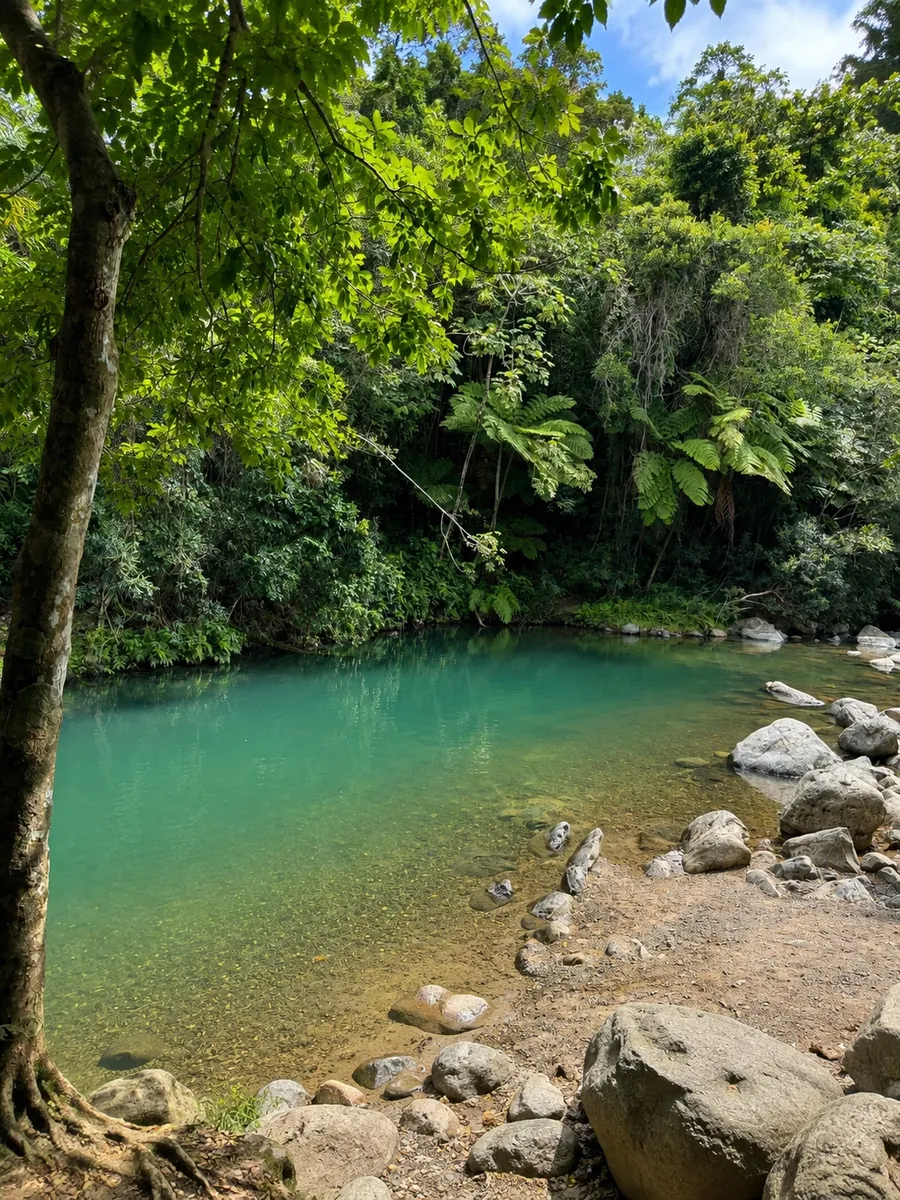
In northeastern Puerto Rico, a mountain can hide behind a passing cloud and reappear in a sweep of green. El Yunque is more than a scenic stop: its shifting elevations nurture different forest communities, and its rivers are part of the landscape that sustains communities well beyond the mountains.
This is the only tropical rainforest in the U.S. National Forest System. Rather than trying to see everything at once, the most rewarding visit begins with a choice: discover the forest through a visitor center, enjoy roadside viewpoints, follow a trail, or seek a lower-elevation river experience. Those choices have different access roads, physical demands and rules.
A forest with centuries of history
Its protected history reaches back to 1876 under the Spanish Crown. In 1903, the United States established the Luquillo Forest Reserve. Over time it became both a public forest and an important center for tropical forest research. What visitors see today reflects conservation, scientific study and the recovery of vegetation after storms.
The Luquillo Mountains are also part of Puerto Rico’s cultural landscape. Indigenous associations with these mountains and accounts of Yokahú belong in any discussion of El Yunque, but oral traditions and interpretations should not be mistaken for a single proven origin story for its name.
Why this rainforest looks different as you climb
The lowland tabonuco forest, palm-dominated slopes and cloud-influenced higher elevations do not look or feel identical. Rainfall, altitude, wind and soils shape the tree canopy, the changing sounds of birds and coquí frogs, and the wet trails beneath your feet.
El Yunque also protects important habitat for the endangered Puerto Rican parrot and many native plants. Wildlife sightings are never guaranteed; the experience is often about slowing down enough to notice the forest’s textures and sounds.
Trails, waterfalls and viewpoints: choose your kind of visit
The main PR-191 recreation corridor is associated with scenic stops, trails and overlooks such as the La Coca waterfall area and Yokahú Tower. Waterfalls including La Coca and La Mina can be described as part of the rainforest heritage, but access to a particular trail or fall must be checked on the date of travel. Island Ride PR does not advertise a guided hike or waterfall excursion to those sites. A viewpoint photographed in an older travel article may have different access today: parking, trail and road sections can change with maintenance and weather.
Angelito Trail is a different, lower-elevation outing leading toward the Río Mameyes. It is a useful option for visitors interested in a forest walk and river scenery, but the ground may be muddy, and its river is not an automatically safe swimming site. The official visitor center, El Portal, is another distinct experience with interpretation, facilities and its own admission arrangements.
Do you need a reservation or a ticket?
According to the federal Recreation.gov notice, the former reservation system for entry to the PR-191 recreation corridor is suspended; access has been described as first-come, first-served. That does not guarantee entry to every trail or stop on a particular date.
El Portal Visitor Center has its own visitor admission arrangements. Check its current ticket information separately, and confirm forest alerts and closures before leaving. Avoid relying on a third-party booking page that makes it sound as though one paid ticket grants access to every part of the forest.
How to plan a visit without rushing
Choose one primary experience, then add one or two nearby stops if conditions allow. A family interested in interpretation might start at El Portal. Visitors who want panoramic scenery can focus on the PR-191 corridor where open, while those after a river walk may prefer Angelito. These are alternatives, not one continuous route.
Ask your driver or tour provider which entrance and meeting point are intended. Not every “El Yunque tour” goes inside the National Forest; some take place at independently operated attractions in nearby Río Grande and Luquillo. A zipline or ATV adventure can be enjoyable, but it should be described as a separate commercial activity, not an official forest trail.
Where to eat before or after El Yunque
A rainforest visit can begin with coffee and breakfast in Palmer or Río Grande and finish with a meal toward Luquillo. These are nearby businesses, not dining rooms operated by El Yunque National Forest. They are suggested from editorial sources such as Platea and Discover Puerto Rico, alongside verified local listings.
For an early meal consider 48 Bakehouse, Ekelekua or Degree 18 in the Río Grande area. Lluvia Deli Bar offers another nearby café option, while El Océano en Tu Mesa focuses on seafood. For a more leisurely stop after the forest, Terruño at the Luquillo Kiosks is an alternative. Distances and opening hours vary, so build your itinerary around the actual entrance and your restaurant booking.
Before visiting
The forest can change quickly with rain. Check official access notices and the forecast, wear shoes with traction, carry drinking water and stay on designated paths. Avoid entering rivers during or after heavy rainfall because rising water can arrive from upstream even if the sky above you looks clear.
Nearby natural rock slides: Discover Las Pailas in Luquillo, a separate Río Sabana attraction with its own access rules and river conditions.
Explore places and experiences
El Portal Visitor Center
An introduction to forest ecology, culture and conservation through exhibits and ranger-led interpretation. It is not the same as entering every trail in the PR-191 corridor; check the center’s own admission details.
Angelito Trail & Río Mameyes
A lower forest walk toward Las Damas and the Río Mameyes. This is a nature walk with uneven ground; river conditions can change. Use the dedicated map pin for the trail rather than the general El Yunque destination.
La Coca, Yokahú & the PR-191 corridor
Roadside rainforest views and recognizable viewpoints help explain the appeal of El Yunque. Access to particular sites depends on posted restrictions, parking and ongoing works; consult current maps and alerts.
Puente Roto & the lower forest
This lower-elevation area is linked to Río Mameyes views and riverbanks rather than the high-elevation scenic road. It should be planned as its own stop, with care around rocks and changing current.
Las Pailas — nearby Luquillo river experience
Las Pailas is known for water-smoothed rocks in Luquillo and is commonly discussed alongside eastern rainforest outings. It is not a developed water park and should not be presented as an official El Yunque National Forest attraction. Wet rock and changes in flow create real hazards.
Nearby adventure operators: zipline and Carabalí
Rainforest Zipline Park and Carabalí Rainforest Adventure Park operate separate commercial adventures in the broader east-coast area. Confirm their locations, age or weight rules, prices and booking terms directly; a booking is not a permit to enter El Yunque.
48 Bakehouse
A bakery and brunch café in Palmer, useful for coffee, pastries and a relaxed breakfast before heading toward the forest. Confirm its opening day before planning around it.
Ekelekua — Brunch, Bar & Tapas
A brunch option in Río Grande with Puerto Rican coffee and a broad breakfast menu; Platea specifically highlights its creative Benedict-style plates. A good morning stop, not a restaurant inside the forest.
Degree 18 Juice Bar
A juice and smoothie bar in Palmer known for fruit bowls and plant-forward choices. A lighter option around a visit to the rainforest; check current menus and hours.
Lluvia Deli Bar & Artefacto
A café and restaurant in Palmer suitable for coffee, brunch or a meal after an outing. It is in the surrounding town area, not within the federal forest recreation corridor.
El Océano en Tu Mesa
A casual seafood-focused stop along PR-3 in Río Grande. Platea mentions fresh fish and seafood dishes; it is a separate roadside food stop, not an attraction inside El Yunque.
Terruño Comida Artesanal
A Puerto Rican restaurant at kiosk 20 in the Luquillo Kiosks, known for meat and seafood. Consider it for a later lunch or dinner paired with a visit to Luquillo; allow a separate drive from the forest.
Frequently asked questions
Is El Yunque free, and do I need a reservation?
The former corridor reservation program is suspended according to Recreation.gov. However, access conditions can change, and El Portal has separate admission details. Check both official pages shortly before visiting.
What are the best things to do in El Yunque?
Choose according to your interests: forest interpretation at El Portal, permitted viewpoints and trails along PR-191, or a lower-elevation walk such as Angelito. Not all sites can be combined in one visit.
Can I visit El Yunque without a tour?
Visitors can explore permitted public areas independently, subject to access and safety rules. If using private transport, arrange a suitable return pickup rather than assuming on-demand pickup will be available inside the forest.
Is it safe to swim in El Yunque rivers?
No natural river is universally safe. Rain upstream can cause sudden rises in water, and wet rocks are slippery. Follow official warnings and avoid entering the water when conditions are uncertain.
Are zipline and ATV tours inside El Yunque National Forest?
Not necessarily. Nearby private adventure companies are separate from federally managed recreation sites. Verify the provider’s actual meeting location before booking.
Private transportation to selected river areas near El Yunque
Island Ride PR can review private ground transportation to agreed, accessible river-area stops, including the Las Pailas area in Luquillo when permitted and available. We do not offer guided visits to waterfalls in the main PR-191 forest corridor. River conditions, private-property entry fees and access rules must be checked separately.
Ask about river-area transportation